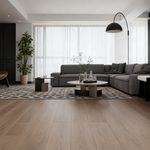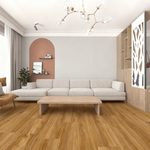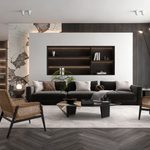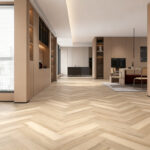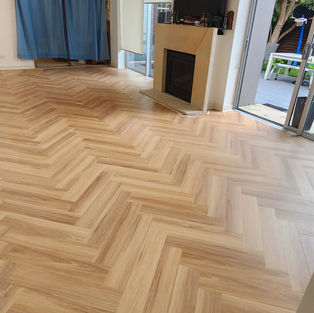

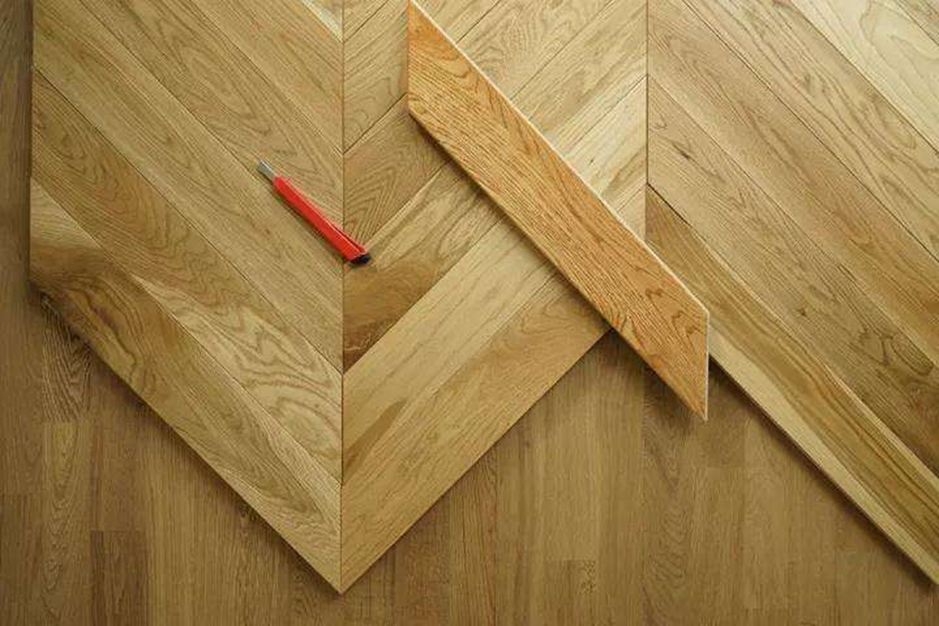
Engineer chevron flooring combines the timeless elegance of the chevron
pattern with the superior stability of engineered wood construction. Each rectangular
plank is precision-cut at 30, 45, or 60-degree angles at both ends and arranged to
form a seamless, continuous V-shaped pattern where planks meet precisely at the
centreline. This flooring type features a natural hardwood veneer top layer bonded to
a multi-layer plywood core, delivering the authentic beauty of solid wood with
enhanced dimensional stability. It is the ideal choice for modern luxury residences,
underfloor heating systems, and high-end commercial spaces.
Material Construction
The foundation of engineered wood chevron flooring lies in its sophisticated multi-
layer cross-ply construction. The top layer consists of a natural hardwood veneer,
typically 2 to 6 millimeters thick, sourced from premium species such as European
oak, American walnut, hard maple, or white ash. This veneer preserves the complete
natural grain structure, including medullary rays, cathedral patterns, and mineral
streaks that make each plank unique. Beneath the veneer, 3 to 12 layers of plywood
are stacked with grain directions alternating perpendicular to adjacent layers. This
cross-ply configuration effectively neutralizes the anisotropic expansion and
contraction tendencies of wood, limiting dimensional change under humidity
fluctuations. All layers are permanently fused using high-strength, environmentally
certified adhesives under high temperature and pressure, ensuring permanent
bonding with no risk of delamination.
Each plank undergoes precision milling with manufacturing tolerances not exceeding
0.05 millimeters. The angled end cuts are held to tolerances of ±0.2 degrees,
ensuring that every chevron installation achieves perfect V-shaped continuity with
uniform joint lines and pattern symmetry. The locking system, where applicable,
delivers engagement strength exceeding 500 Newtons for secure, lasting
connections.
Underfloor Heating Compatibility
Engineered wood chevron is the premier choice for underfloor heating systems. Its
thermal conductivity ranges from 0.18 to 0.22 watts per meter Kelvin, ensuring rapid
and uniform heat transfer throughout the floor surface. The multi-layer construction
withstands the thermal cycling of on-off heating systems without developing stress
cracks. The veneer thickness of 3 to 6 millimeters provides an optimal balance
between efficient heat transmission and the natural warmth of wood underfoot.
Installation requires elastic polyurethane adhesive or MS polymer adhesive, which
accommodates minor thermal expansion. Prior to installation, the heating system
must undergo a 24-hour operational test at gradually increasing temperatures, with
the subfloor temperature stabilized between 18 and 28 degrees Celsius. The
maximum surface temperature for occupied areas should not exceed 27 degrees
Celsius.
Refinishing Capability
Unlike laminate or hybrid flooring, engineered wood chevron can be sanded and
refinished to restore its original beauty. Veneer thickness determines refinishing
capacity: 3-millimeter veneer allows one to two full sanding cycles, 4-millimeter
allows two to three cycles, and 6-millimeter allows three to four cycles. Each
refinishing cycle extends service life by 15 to 20 years and costs approximately 70 to
80 percent less than full floor replacement. During refinishing, the floor color can be
altered from lighter to darker tones to accommodate changing interior design
preferences. Surface scratches, wear patterns, and minor damage are eliminated
through professional sanding using progressive grits from 40 to 120, followed by
staining if desired, and application of new protective finish.
Authentic Natural Aesthetics
The natural hardwood veneer delivers the same authentic beauty as solid wood.
Each plank displays unique color variations and character marks that cannot be
replicated by printed surfaces. Natural wood fibers provide warmth underfoot that
synthetic materials cannot match, while wood naturally regulates indoor humidity by
absorbing moisture when humidity is high and releasing it when dry.
Chevron Pattern Visual Impact
The chevron pattern itself adds significant design value beyond the material benefits.
The seamless V-shaped alignment creates uninterrupted visual flow, drawing the eye
across the entire space. The pattern can be oriented to make rooms appear larger,
hallways longer, and ceilings higher. In open-plan spaces and corridors, the
directional pattern naturally guides traffic flow. Real estate studies indicate chevron
flooring can increase property value by 8 to 15 percent compared to standard
straight lay installations. The pattern has remained in continuous use since 16th-
century France, transcending design trends while maintaining its association with
luxury and sophistication.
Versatile Installation Methods
Engineered wood chevron supports three installation methods, providing flexibility for
different project requirements. Glue-down installation uses full-surface elastic
polyurethane adhesive applied with a notched trowel, providing the most solid
underfoot feel with no hollow sounds. This method is ideal for concrete subfloors,
underfloor heating systems, and large-area installations.
All installation methods require subfloor flatness within 2 millimeters over 2 meters.
Concrete subfloors must have moisture content below 2.5 percent, while wood
subfloors must be below 12 percent.
Installation Considerations
Chevron installation demands higher expertise than standard straight lay flooring.
The starting point must be precisely established using a centerline or diagonal
reference to ensure pattern symmetry. Each plank must maintain the exact specified
angle with tolerance not exceeding 0.5 degrees. Material waste factors range from
20 to 30 percent and must be accounted for in material ordering.
Long-Term Value Proposition
Engineered wood chevron represents a superior long-term investment compared to
alternative flooring options. The lifespan ranges from 40 to 50 years with proper
maintenance and refinishing cycles. Each refinishing cycle costs approximately 15 to
20 percent of replacement cost while extending service life by 15 to 20 years. The
chevron pattern adds measurable value for resale, with studies indicating 8 to 15
percent property value premiums. The timeless design remains desirable across
generations, unlike trendy alternatives that lose appeal. Individual damaged planks
can be replaced without disturbing the entire floor, reducing long-term maintenance
costs.
Professional Summary
Engineered wood chevron flooring represents the optimal intersection of timeless
design, natural beauty, and modern engineering. Its multi-layer cross-ply
construction delivers exceptional dimensional stability that outperforms solid wood,
making it suitable for underfloor heating systems and demanding environments. The
natural hardwood veneer provides authentic grain patterns and warmth that synthetic
materials cannot replicate. The chevron pattern itself adds significant aesthetic and
property value, with its seamless V-shaped continuity creating visual impact that has
remained desirable for over four centuries. With proper selection, installation, and
maintenance, engineered wood chevron flooring provides 40 to 50 years of service
life, including multiple refinishing cycles that restore its original beauty. It is the
premier choice for luxury residences, high-end commercial spaces, and any project
where uncompromising quality and timeless elegance are required.